Transition in Colombia: A Living Tapestry of Regeneration and Hope
By: Transition in Motion Tour 2026 Team – Mauricio Deliz, Dennise Dueñas, Claudio Madaune
By: Transition in Motion Tour 2026 Team – Mauricio Deliz, Dennise Dueñas, Claudio Madaune
Between January and February 2026, Colombia became the setting for a deeply inspiring experience: the “Transition in Motion Colombia 2026 Tour”, an initiative organized by Cambia el Mundo Colombia, Change the World (Norway), and Transición Colombia.
More than a series of activities, this tour was a journey through a country where transition is no longer just an idea, but a reality in the making. Through encounters with ecovillages, ecobarrio initiatives, rural and urban communities, permaculture networks, Afro-descendant organizations, and public institutions, a clear phenomenon emerged: Transition in Colombia is alive, diverse, and expanding.
A Transition emerging from multiple territories
One of the main learnings from the tour is that Transition in Colombia does not follow a single model. It manifests in many ways:
- In ecovillages such as Nashira, where governance and community life are being strengthened.
- In urban ecobarrio initiatives like Aguacatal in Cali, where transformation happens within the city.
- In educational initiatives such as Semillas Kariba, planting a new culture from childhood.
- In rural territories that integrate conservation, sustainable production, and regenerative tourism.
- In institutional dialogue spaces where civil society, public entities, and municipal officials collaborate to integrate transition methodologies into territorial policies.
This mosaic of experiences shows that Transition, rather than an abstract concept, is a practical approach adapted to each context.
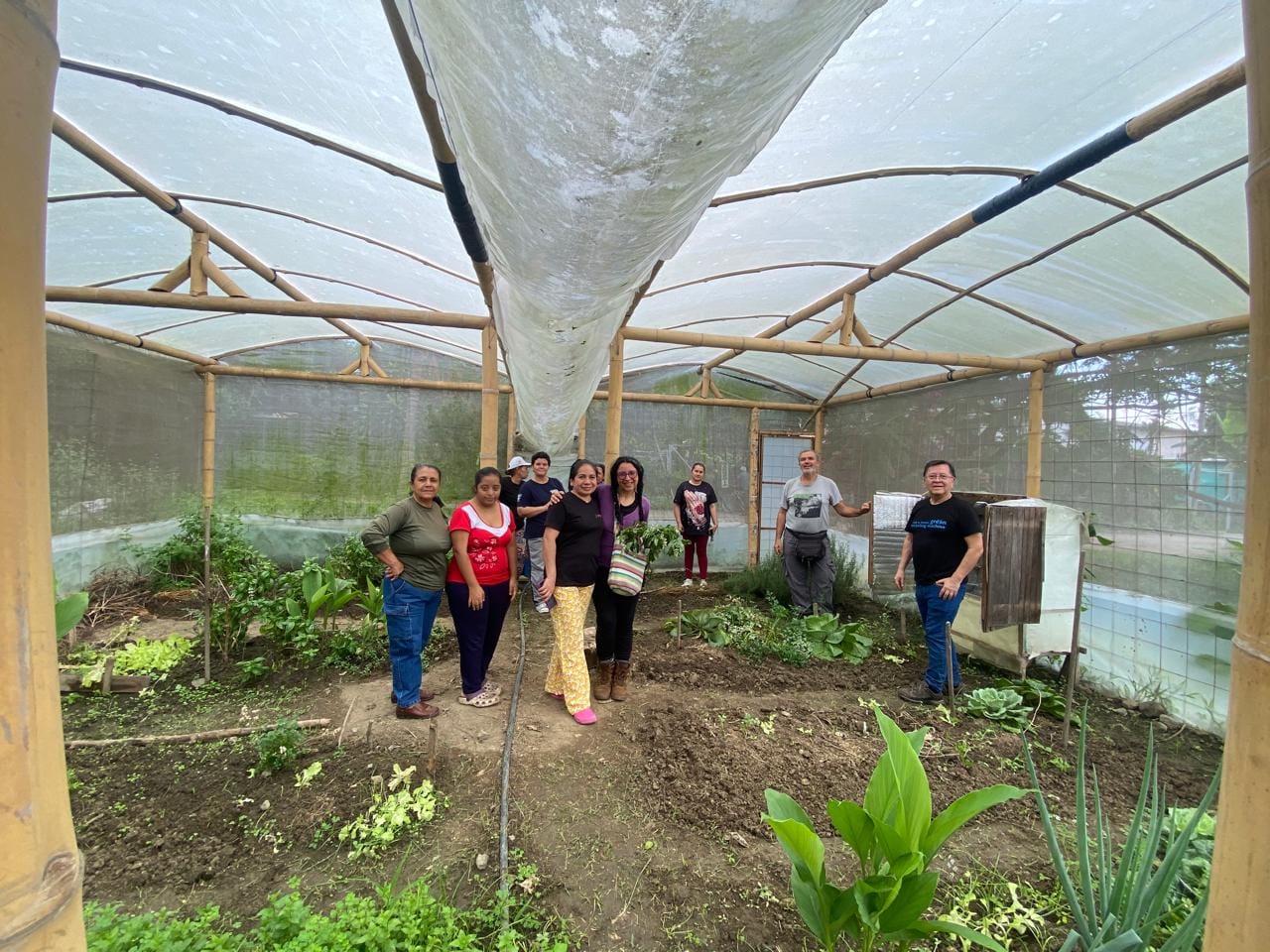
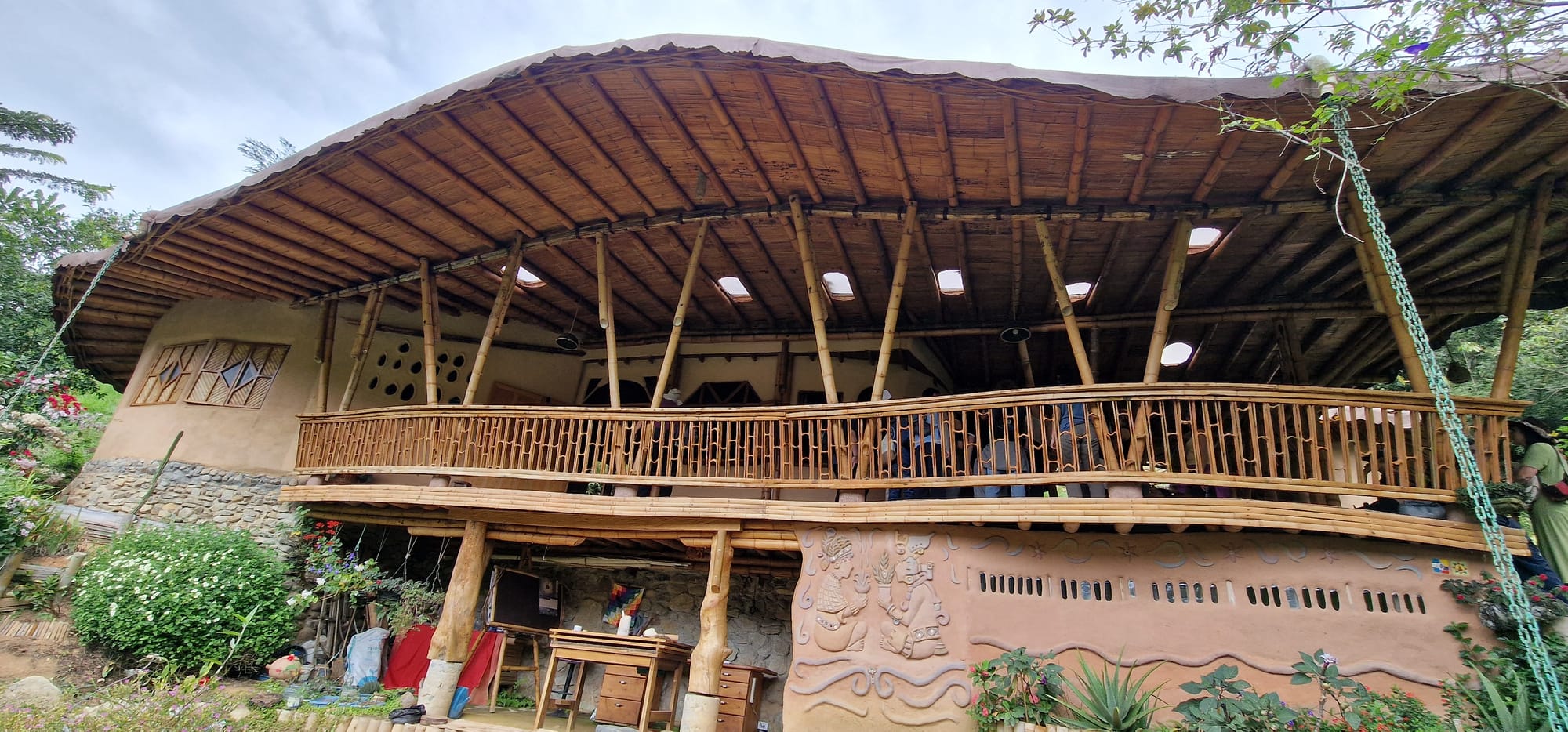
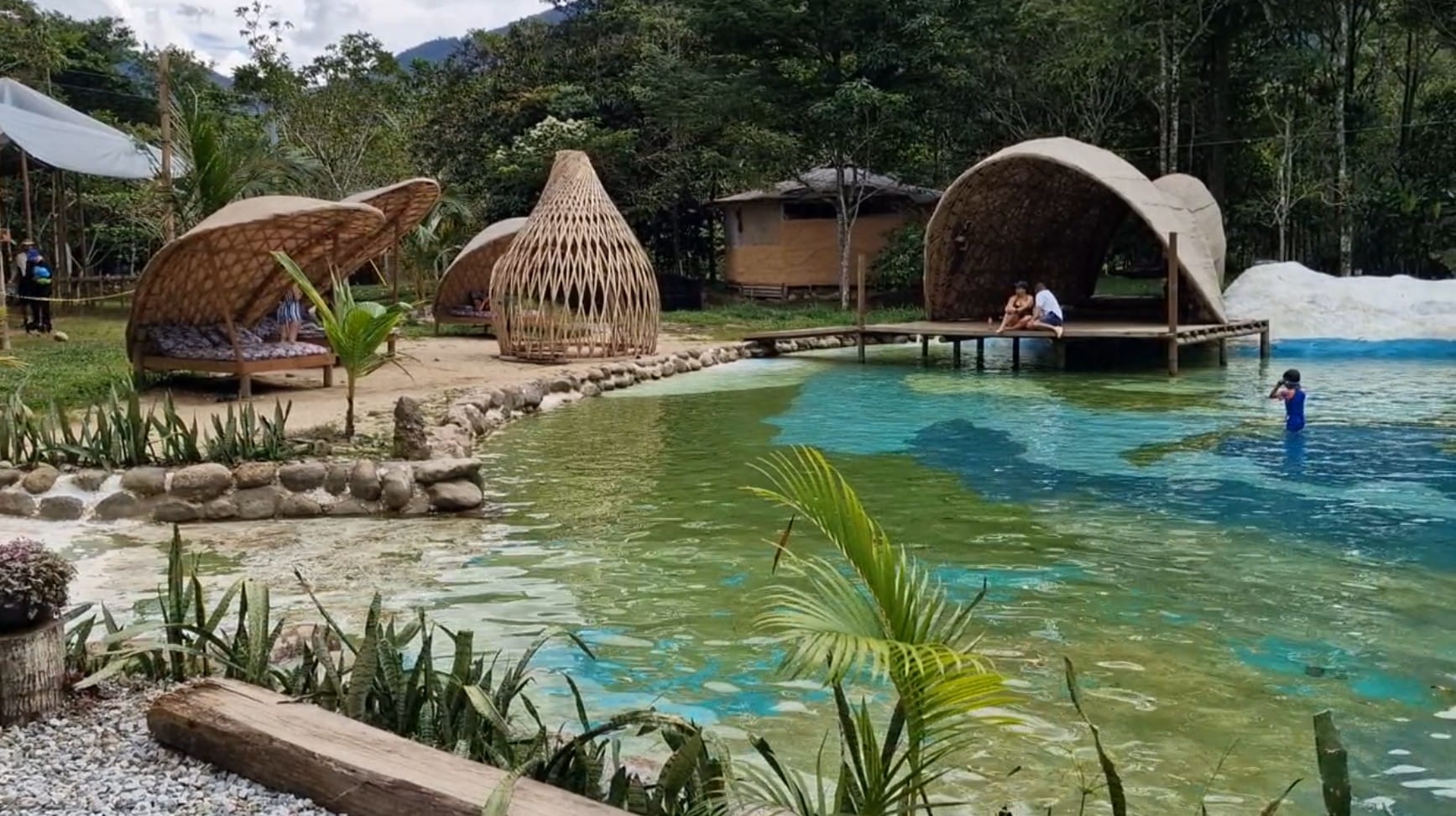
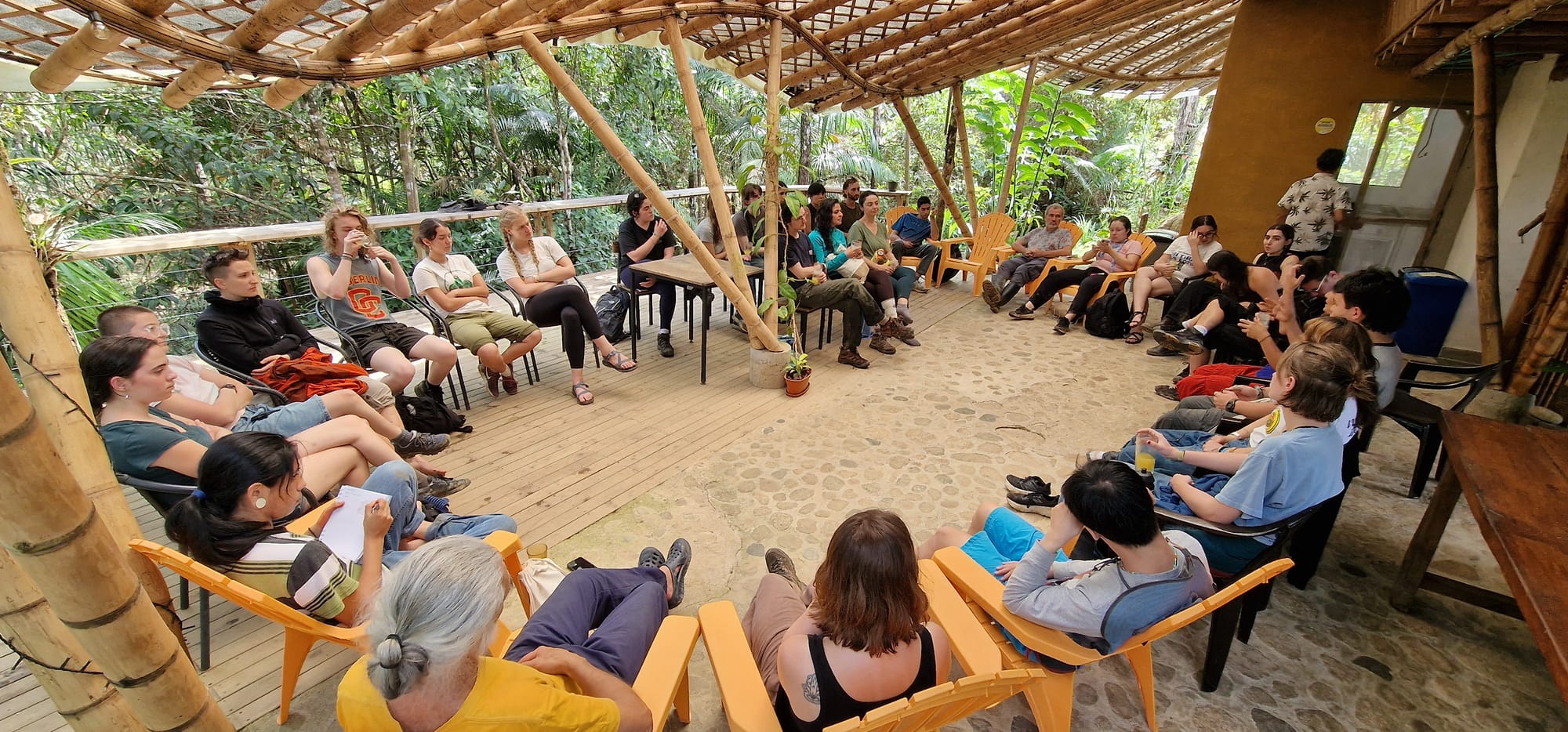
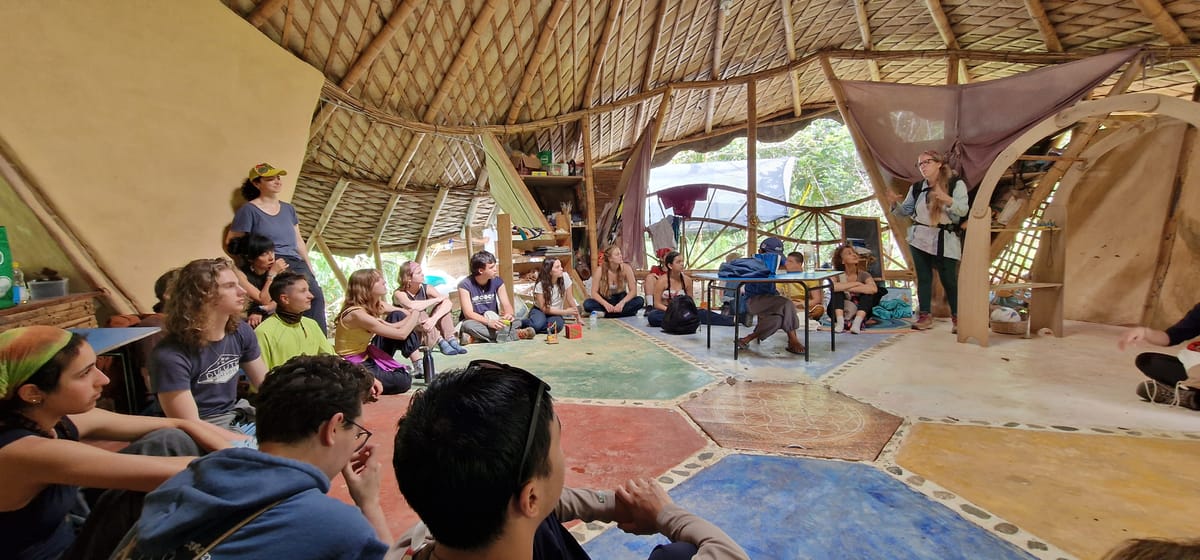
Photos: Advising Nashira ecovillage; Tacuara Bioconstruction; Zafra Nature Reserve; Speech to students from Oberlin College, Ohio, USA
Key advances: networks, methodologies, and trust
During the tour, significant progress was observed in three key areas:
1. Strengthening living networks
Colombia has a strong base of interconnected initiatives. Spaces such as the 20-year gathering of the ecovillage movement reflect accumulated experience and growing maturity.
2. Practical tools in action
Methodologies such as Transition Initiatives, permaculture, participatory governance, conflict mediation, personal development, and solidarity-based economies are already being applied on the ground. These are not just theories, but tools that help sustain real processes over time.
3. Bridges with institutions
Important advances were observed in collaboration with public institutions, such as the exploratory work with DAGMA in Cali, opening pathways to integrate transition approaches into local policies.
A transition with its own identity
A particularly relevant aspect is that transition in Colombia is developing its own identity. It is not a copy of European models, but a process that integrates:
- Ancestral and cultural knowledge
- Grassroots community processes
- Territorial diversity (urban, rural, Afro-descendant, educational)
- A strong human and relational dimension
Here, Transition is both about ecological solutions, and also about rebuilding relationships, trust, and a sense of community.
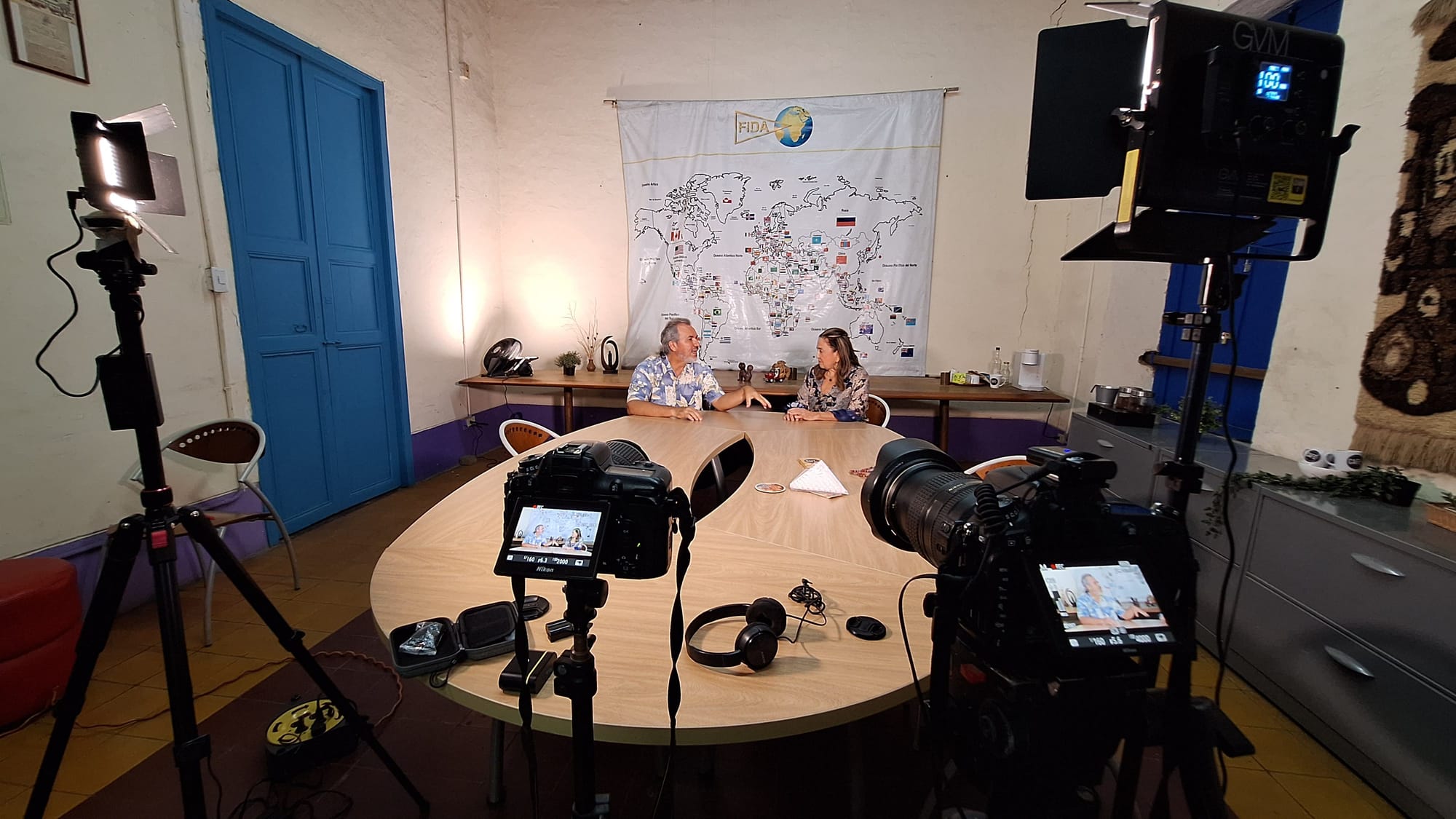
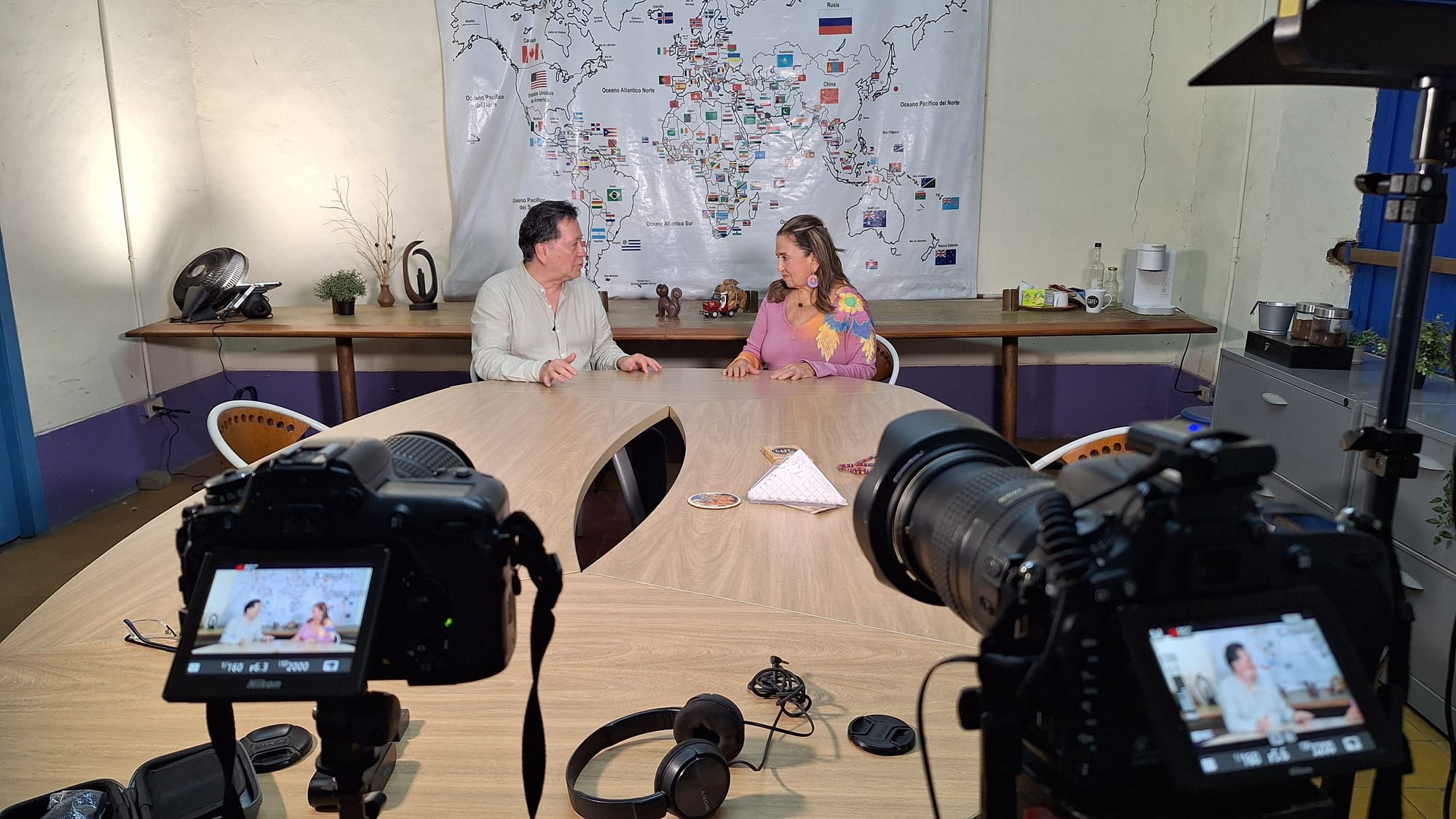
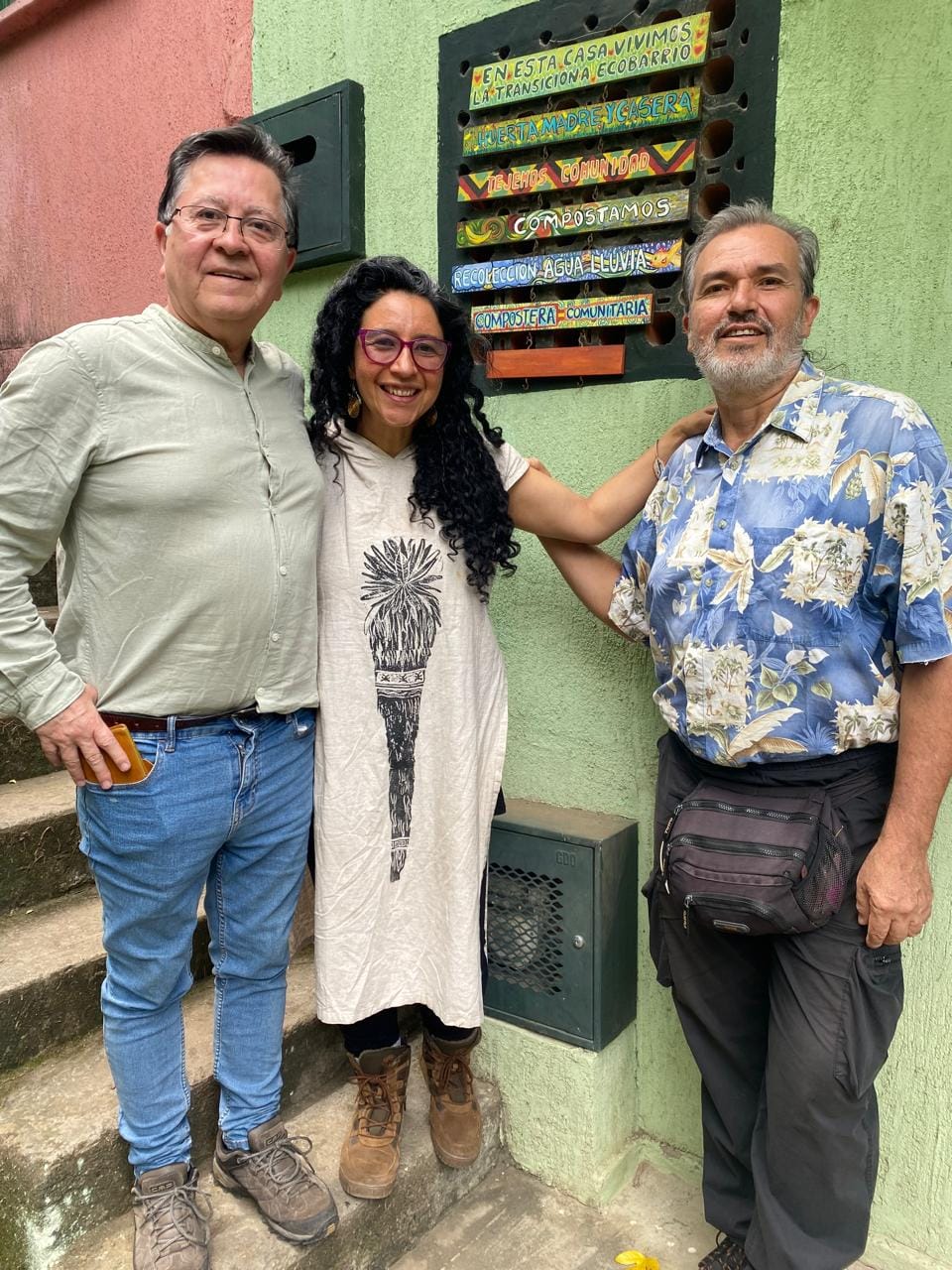
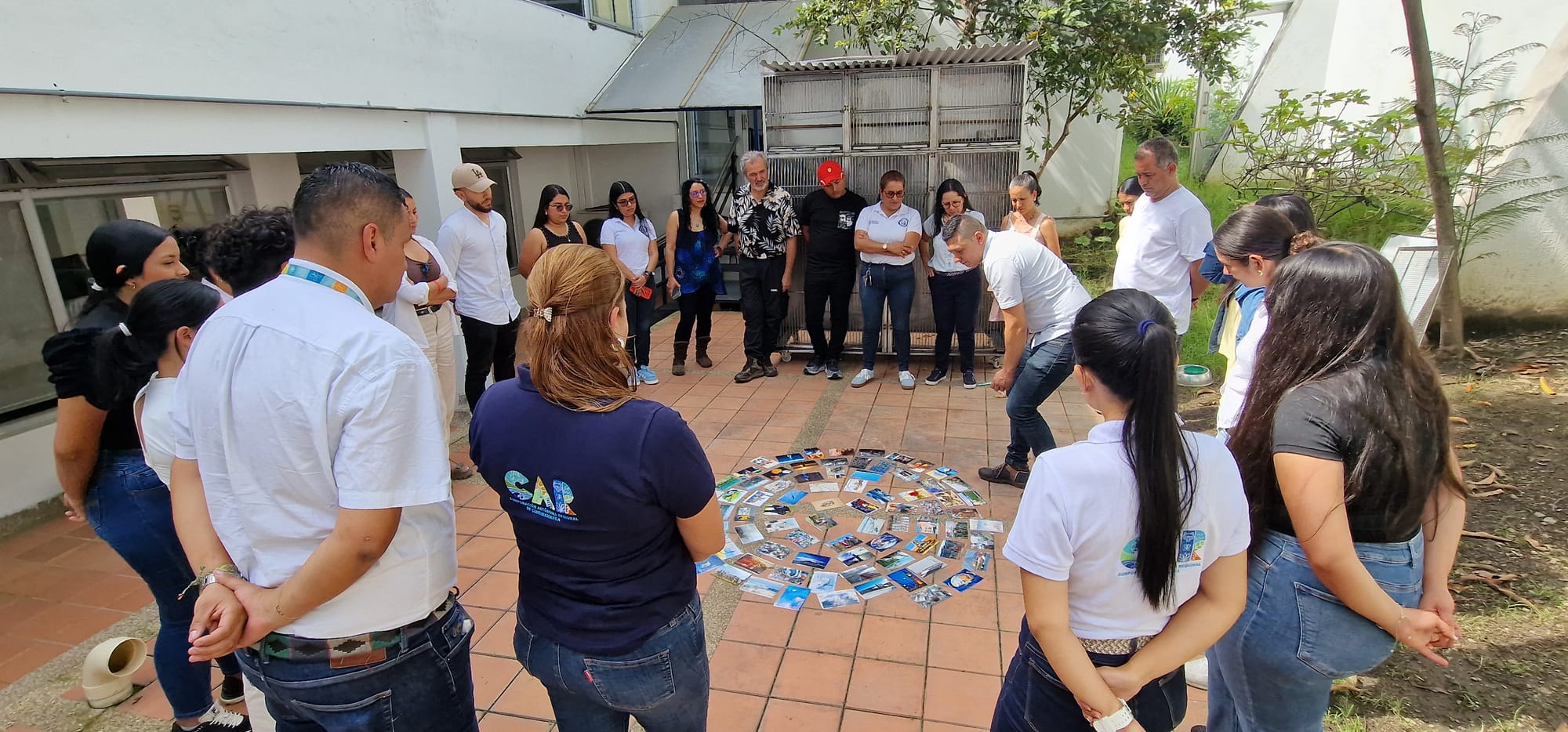
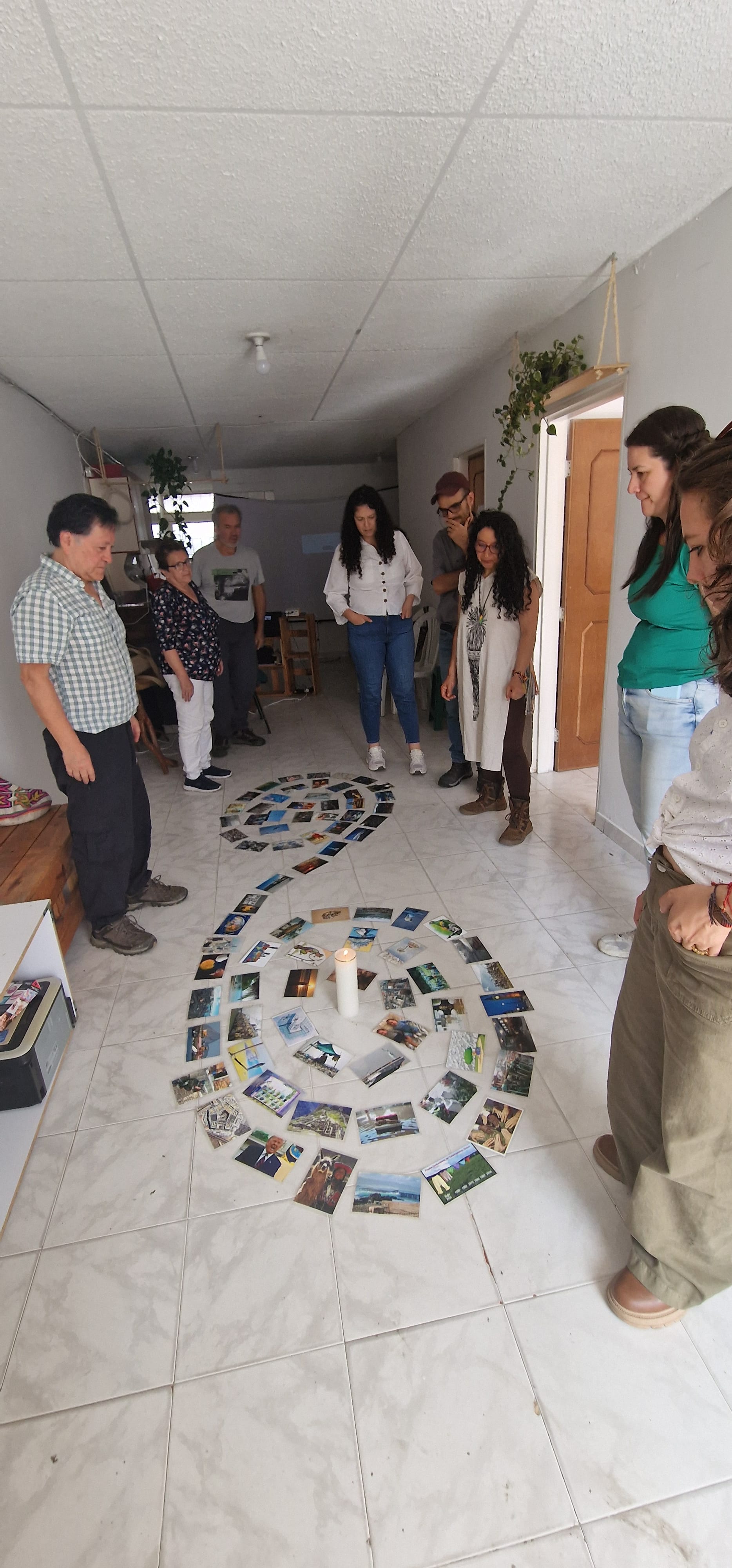
Photos: Disseminating information about transition - “El Ágora”, Telepacífico channel; Studio visit to Ecobarrio Aguacatal; Workshop with officials from 14 municipalities; Workshop with ecosocial and community leaders of Sumapaz
Global inspiration from the local
The tour also showed how local processes connect with global challenges. Exchanges such as the one held with international students at Solunagua highlight Colombia’s potential as a source of inspiration for other regions of the world.
Initiatives such as Solunagua, natural reserves, bioconstruction projects, and intentional communities demonstrate that practical, replicable, and deeply human solutions already exist in response to current crises.
Facilitating Team


Their work enabled the sharing of tools, and also the opportunity to listen, learn, and weave meaningful relationships.
Conclusion: A Country in Real Transition and Regeneration
The overarching conclusion of this tour is clear: Colombia is not just beginning its transition; it is already living it in a vibrant way. Here, transition is understood in its broadest sense, integrating all the initiatives, collectives, and projects that—across diverse fields—contribute daily to sustainability, the care for life, and regeneration.
Today, there is a great opportunity for the Transition initiatives to strengthen these existing processes and catalyze the creation of new proposals based on its methodologies and systemic design tools.
While the "2026 Transition in Motion Tour - Colombia" was a labor of love self-funded by the facilitating team that managed to sow valuable seeds, we are aware that for this impact to grow, securing resources is essential. Scaling and developing this proposal will allow the transition movement to play a leading role in the country’s transformation.
The invitation that emerges is powerful: to continue connecting and co-creating. Change is already underway, and Colombia has a wealth of experiences that the world needs to know.
Acknowledgements
We deeply thank all the people, communities, and organizations who made this tour possible through their openness, trust, and commitment.
Thank you for showing, through concrete actions, that another way of inhabiting and building community is already underway.
For more information and contact: giratransicionenmovimiento@gmail.com
@Changetheworld @CambiaelMundoColombia @TransicionColombia