Pathways to local economic system change
If we’re working for a ‘post growth’ economics, that will entail actual people turning ideas into actually existing enterprises and institutions. How can we create the conditions for new economic actors, models and relationships to emerge?
Begin where you stand
If you were to start ‘making change’, where would you begin? Begin where you stand, many people would say. Making economic change in a place - in your place - can really mean something. It’s achievable, it’s tangible, it’s human scale. It’s also part of many initiatives and narratives about economic change that emphasise decentralising economic and political power, spreading ecological prosperity, and creating the conditions for effective democratic citizen participation.
These times seem urgent and profound. The crises we face are real. It’s natural for attention to be directed toward big, inspiring ideas of a better world that might offer the kind of hope and understanding that matches the import of this historical moment. In this we can find relief from our anxieties and meaning for our life projects. Some of the initiatives and narratives thus inspired can take on a kind of religiosity, offering certainty, belonging, and identity, a role the church might have filled a few generations ago. This can be wonderful but problematic for a few reasons, including limiting participation to true believers, even if some of the ideas involved are otherwise worthy.
Clearly, it’s wise to engage with like-minds locally, or through trans-local or place-less networks. Engaging with people who are different and ‘not like us’ can be uncomfortable and difficult, but it’s necessary. If we’re only interested in engaging with people like us in ways that reinforce in-group belonging and identity, especially if disembodied via cloud-based platforms, then what kind of change are we really making?
Acting locally or regionally, or bioregionally, can be practical and focused on tangible outcomes. The practical is itself a kind of narrative. If stripped of unnecessary ideologies, practical work in a place can bring together people with diverse world views and political affiliations. If we are interested in bridging ideological divides, practical projects can create opportunities for authentic dialogue and collaboration. This isn’t a unique observation, but dialogue is the foundation for creating mutual understanding and is at least part of the antidote to the political divisions we face. Adequately addressing some of the valid economic grievances which are driving people to the extremes, demanding quick and simplistic solutions, is another.
Actually, many of the grievances that animate both right and left wing populism are very nearly the same - inequality of wealth and income; diminished status, dignity, and availability of meaningful livelihoods; exclusion from consequential economic and political decisions; immiseration of the places and communities we love; ecological and atmospheric pollution; lack of opportunities for our children to have better lives than we did. There’s plenty of evidence to overturn the political arguments that merit and university degrees would enable everyone to enjoy the benefits of an integrated globalised free-market economic system. The same with market-based ‘solutions’ to the ‘externalities’ produced by unaccountable corporations - it’s hit and miss. All of this should be common ground on which to build a more united popular political-economy from local to national scale.

The need to change at the national scale is apparent. I feel aligned with much of the discourse around eco-socialism, Degrowth, and related efforts to enthuse and empower political party formations to pick up the ideas and policy proposals that might shift the system at the roots. Of course, we must tax the wealthy much more, regulate the excesses of the financial sector and powerful corporations, fully fund health care and education, provide energy efficient and secure housing, transition the energy system, and more. These are old ideas, but relevant. What’s required, perhaps, is new thinking about how these ideas can become politically possible.
There is well-founded celebration of the successes of Ada Callau and EnComú in Barcelona and the recently elected New York mayor, Zorhan Mamdani, often described as a democratic socialist. The Green Party in the UK is now led by Zack Polanski who has picked up some of these ideas, too, and has energised the party. They now have five MPs. There are many other bright spots, promising new faces and political initiatives, but this route to systems change, at least in the UK, USA and, perhaps most other wealthy countries, may take a long time.
Meanwhile, there’s plenty of practical work that can begin to make a difference in places that can bring people together, relocalise pro-social and pro-ecological economic activity, and ameliorate the concerns that fuel populist extremism. One of the powerful drivers of economic change is entrepreneurship and the innovations they can bring into being - social, organisational, financial, business model, relational, technological, and so on. They can create opportunities for meaningful livelihoods and expand our ideas about what’s possible. If we’re interested in the kinds of change represented by the various streams of, let’s say, the wider post-growth economics movement, then it will take people to put those ideas into practice, conceiving and starting up the enterprises and institutions that bring these ideas of change into tangible existence.
Entrepreneurial Ecosystems
The role of the entrepreneur is important. The meaning of ‘entrepreneur’ and ‘entrepreneurism’ is shaped, in part, by culture. We should ask, what kind of entrepreneurs are called for in these times? Where do they come from? How might we create the conditions for their emergence? And not only entrepreneurs, but how can new beneficial economic actors of all kinds emerge? Cultures evolve in the context of complexity, one might argue. Culture change isn’t a design challenge that can be solved from an objective perspective, but rather one that demands participation and doing practical things in public. Imagination is important, obviously, it’s part of the human package. There is no crisis of imagination but rather a lack of visible, accessible pathways for achieving practical aims which then might inform the collective imaginary. If there are no pathways, why would anyone imagine that they could, for example, start up a ‘regenerative enterprise’ in a place?
The historical development of Silicon Valley offers some important lessons. (This talk of entrepreneurs and Silicon Valley may be disturbing to some of my fellow travelers, but we must be willing to keep an open mind and take the learning from wherever it might be found.) The roots of Silicon Valley can be traced to the California Gold Rush of 1849. East Coast financiers bankrolled the mining operations and the development of industrial mining technology. The resulting cluster of finance capital, steel making, and engineering expertise were then applied to ship building. At the turn of the last century the US Navy’s ‘Great White Fleet’ was built in the San Francisco Bay Area marking the beginning of the ‘military industrial complex’ there. UC Berkeley and Stanford University were part of this story, too. Government spending increased then ballooned during the world wars, giving a start to first-wave electronics and digital technology companies like Hewlett-Packard. The co-inventer of the transistor moved to the Bay Area in the 1950s to start Shockley Semiconductor, then the key innovators there left to start Fairchild Semiconductor, then several of those characters went on to start other companies and venture firms, transforming the South Bay and Santa Clara Valley into Silicon Valley. The clustering of engineering talent, organisational knowhow, finance and venture capital, research universities, and links to government funding continued. It became the growth engine for the US economy for decades and led to what we might now call the ‘technological crisis’ of cloud-based oligarchy.
During the 80s and 90s, academics and economists studied this history and the resulting phenomena of this cluster and its ecosystem. By now, it had a life of its own, so to speak. They identified key elements, such as cross-pollination of ideas, knowhow, and talent; the ‘watering holes’ and network events where people met; the roles played by the research universities who were also spinning out their own entrepreneurs and companies; the availability of funding from private individuals, venture capitalists, banks, and government agencies; incubators and readily available office and research spaces.
Emerging from these elements was a culture that valued risk taking and productive failure, collaboration alongside competition. Soon, nearly everyone knew the stories and the idea that someone could start up a world-changing technology company in their garage was accepted as common sense. It seemed anything was possible. Nearly everyone knew someone who had started a company, was about to start one, or who had invested in one. The cliché that every taxi driver and food server in Hollywood is an aspiring actor or screenwriter developed here, too. ‘Oh yeah, I’m just bartending to cover rent until we complete our angel round.’ The collective imaginary included the possibility that almost anyone could start something up because the pathways were visible and accessible.
San José and other cities played roles that enabled them to harness this juggernaut for the economic development of their places. This experience inspired industrial and redevelopment strategies in cities and regions around the world, attempting to replicate the ‘Silicon Valley miracle’, with mixed results. But this story spawned a wealth of academic literature on clusters, innovation hubs, and entrepreneurial ecosystems. This literature is useful, drawing out the lessons which might have broad applicability no matter the economic system change one wishes to develop, the business models one desires to see implemented, or relationships one hopes might be reconfigured.
Of course, we must be critical of the Silicon Valley experience and its dark history. There is plenty of academic work and investigative journalism highlighting this darkness, the long history of which includes genocide, ecological destruction, worker exploitation, surveillance, data theft, pollution, military links, oligarchy, and more. But understanding the evolutionary process through which it developed and continuously recreates itself can be abstracted for good purpose.
Applying the lessons
There are other cluster examples that confirm some of these lessons. Mondragon is a well-known case which is somewhat unique, problematic, and inspiring. It demonstrates what democratic cooperatives can achieve in a place under conditions of poverty and political oppression. It might be understood as an intentional, endogenous process which aimed at creating employment through cooperative business structures, leading eventually to a kind of pro-social conglomeration. It developed a cooperative ecosystem from within, so to speak, acknowledging the need for education, finance, entrepreneurship, and health care. It has been difficult to replicate but efforts to do so draw on some of the lessons of Silicon Valley whether they know it or not, creating incubators, networks, drawing in educational institutions and local governments, establishing pathways to finance, etc, but often these are piecemeal and without an explicit ‘entrepreneurial ecosystemic’ approach in evidence. In any case, the process is evolutionary, marked by increasing complexity, growing and diversifying knowhow, and bringing key enabling actors into productive relationship.
What might an abundant entrepreneurial ecosystem look like in a place; one that is oriented toward ecological and pro-social thinking; embraces regenerative, cooperative, convivial, pro-social, and commons models; founded on ethics, fairness, and inclusion; aims to drive the transformation toward creating meaningful, dignified livelihoods while addressing the crises of our times? The broad outlines of this picture might include:
• incubator and accelerator programmes that offer below market rents, easy access to experts, perhaps structured learning programmes and introductions to funders;
• co-working hubs, coffee houses, and ‘watering holes’ where interesting people gather to work and interact;
• ample opportunities to learn start up skills and gain sector specific knowhow through talks, workshops, courses, apprenticeships, internships
• networks and public events that create opportunities to build relationships with a diversity of professionals, policy makers, and potential team members
• angel investor networks and venture (post)capitalist institutions that make ‘friendly and patient’ seed and early-stage investments
• local banks and community development financial institutions (CDFI) that offer lending for growth and working capital lines of credit
• professionals and experts able to assist with business model development, legal and finance issues, marketing, and organisational development
• media coverage that raises the visibility of both successful and unsuccessful ventures, the people who animate them, the opportunities to participate, the various institutions comprising the ecosystem, as well as the wider story of economic change - why it’s important, what kind of change is called for, how it is happening, who are the various actors involved, etc.
• local and regional universities, colleges, and vocational schools that participate and offer access to knowledge, knowhow, expertise, innovation, and facilities, while shifting their procurement toward locally/regionally produced products and services
• local and regional governments that offer tax incentives and subsidies, office and production spaces, while shifting their procurement toward locally/regionally produced products and services
• growing cross pollination and collaboration amongst and between local and regional enterprises
• a local and regional culture that values and encourages participation in the entrepreneurial and economic change processes underway, including the risks, successes, and failures
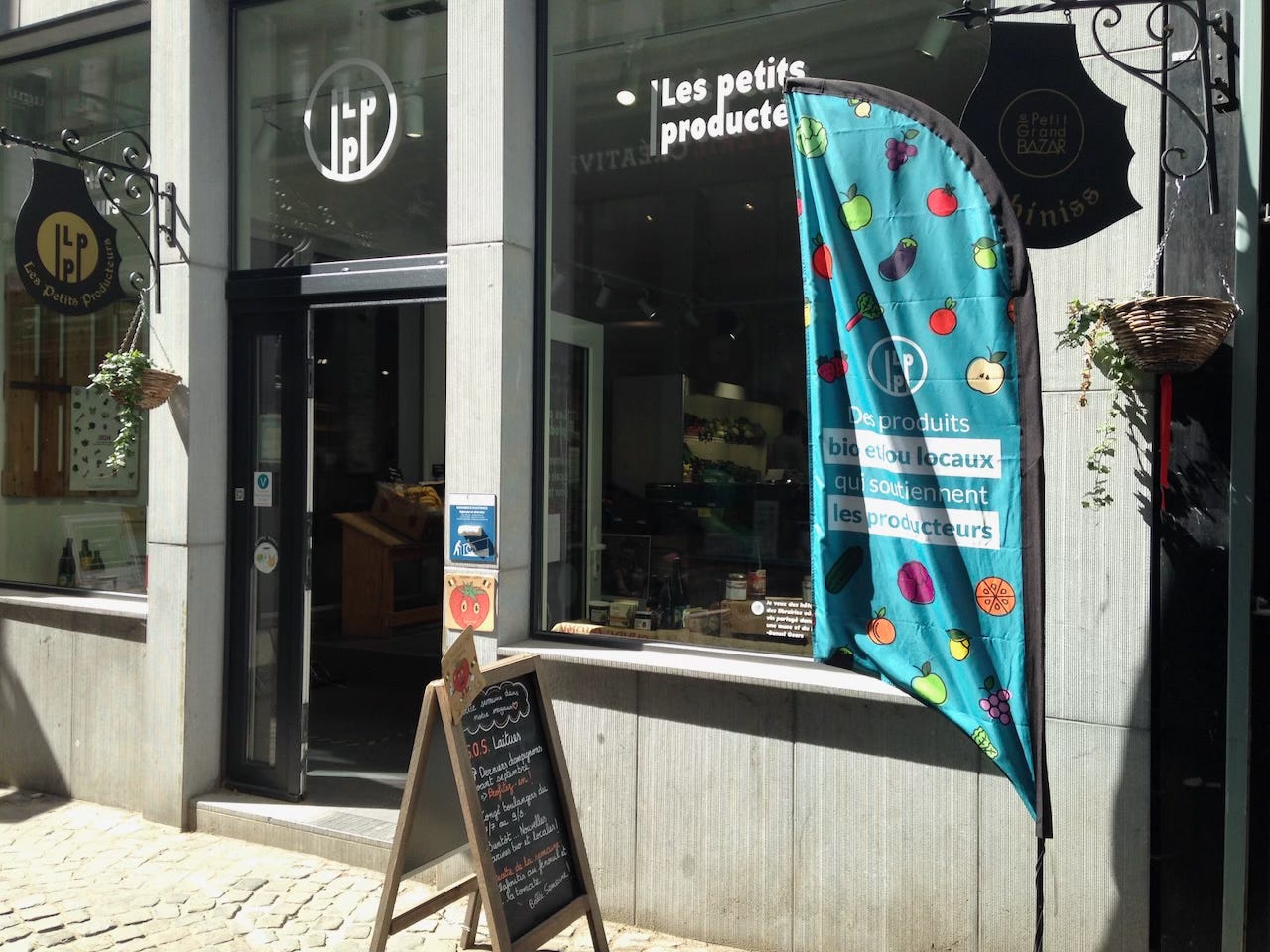
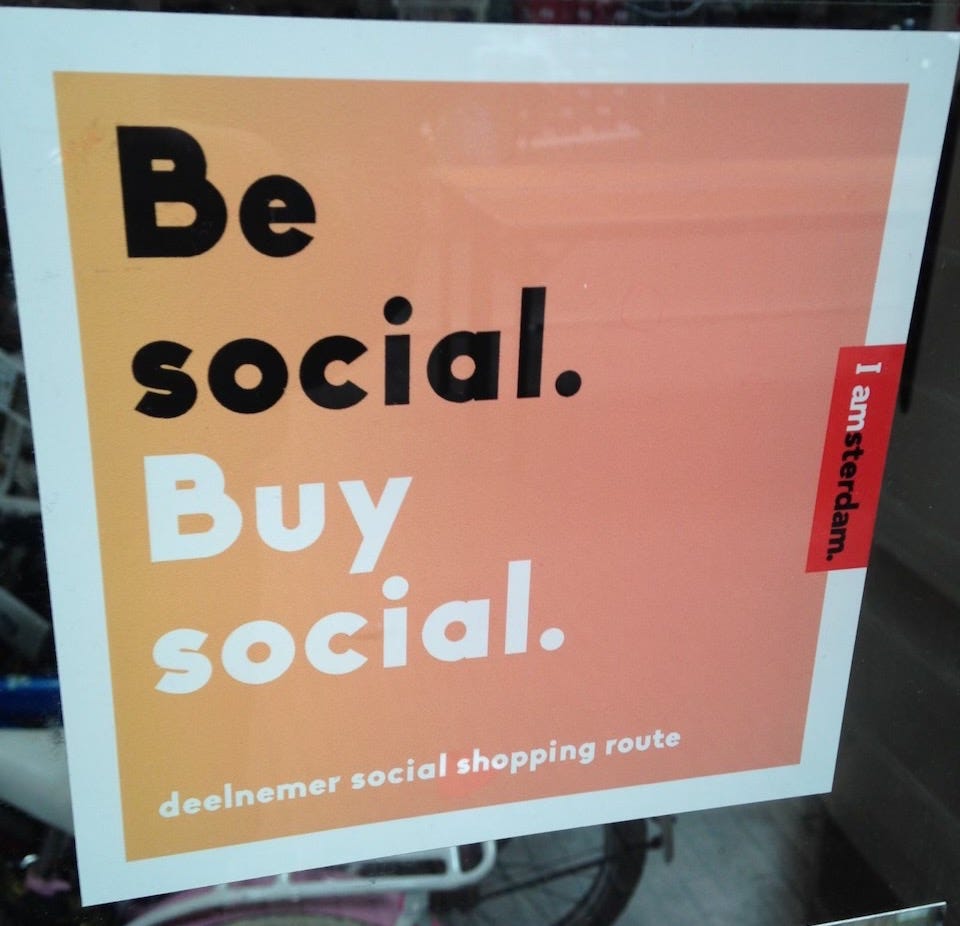
The above outline isn’t a formula but rather a pattern. How it might come to life in a place depends on the place and what people do. Understanding this pattern can help proponents of local or bioregional economic change think clearly about their theories of change, strategies, development roadmaps, and practical projects. There are some places where aspects of this pattern are emerging, mostly through progressive local government initiatives aiming to drive green, sustainable, and/or circular agendas. Some examples include Amsterdam, Barcelona, Freiburg, Preston, among others. In some places, citizen-led initiatives have contributed to the emergence of this pattern, such as Cienture Aliment-Terre in Liege, Ujima Project in Boston, and The Industrial Commons in Appalachia, Torino Social Impact in Turin. I’ve not uncovered anyplace where this pattern has fully blossomed and the economic system of a place has been completely transformed, yet. But these examples represent a start and should be encouraged, critiqued, improved, adapted wherever it makes sense. And where this kind of thing hasn’t yet begun, perhaps now’s your opportunity.
The case of Totnes
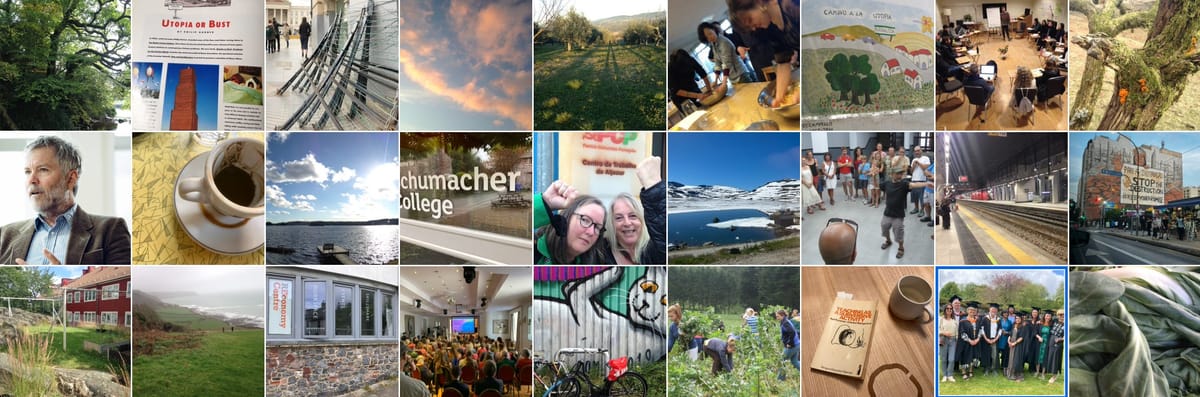
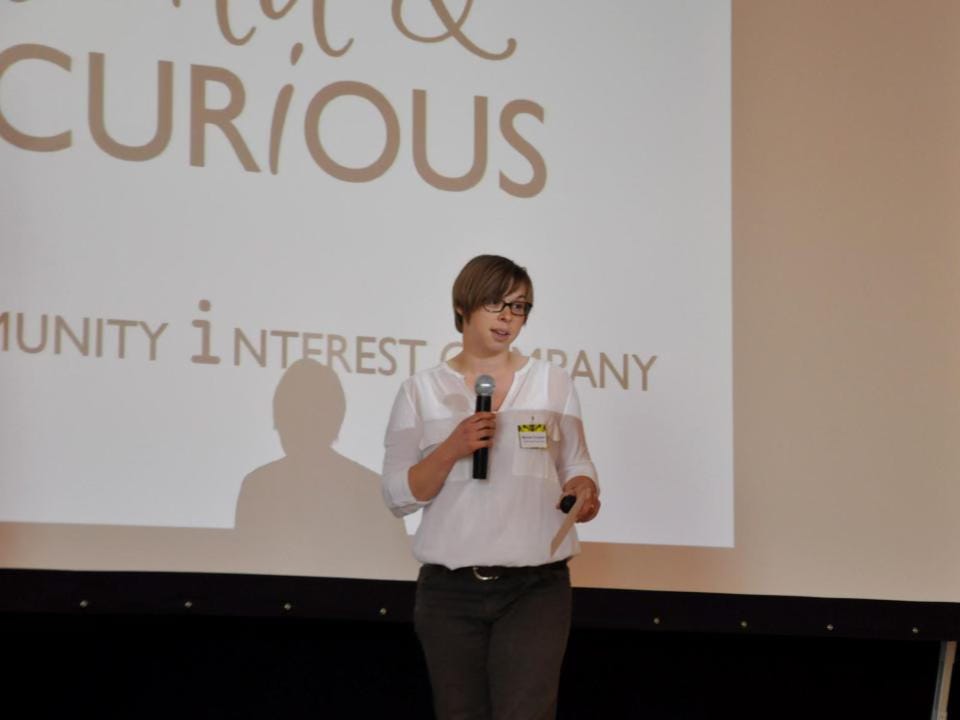
In Totnes, where I live and work, this pattern is emerging as well, imperfect and incomplete as it may be. It’s the home of the first Transition Town initiative in 2006 from which sprung several projects that contributed to this ecological, pro-social entrepreneurial ecosystem. The Totnes Renewable Energy Society emerged from an early TTT open space event and is nationally recognized as a leading innovator in the community renewable energy space. The Totnes Reconomy Project started in 2012 and began running the annual Local Entrepreneur Forum & Community of Dragons. After 14 years, it has coached 55 pitches from over 50 local, pro-social/pro-ecological, entrepreneurs, mostly in food production but also including a range of other activities like clean energy tech, trade-by-sail, and car sharing. And it has facilitated the investments of financial and non-financial support from hundreds of local citizens, creating a relational, reciprocal, and convivial system in the process. Transition Homes CLT has been developing a project to build 39 energy-efficient social housing units, expected to be completed by the end of this year. Food in Community CIC, a food gleaning social enterprise project, is poised to launch a sizable food distribution hub this year, as well, that will contribute to food security in our area. Totnes Grows Flax is a new collaboration with Liflad which aims to regenerate the local fibershed and textile economy.
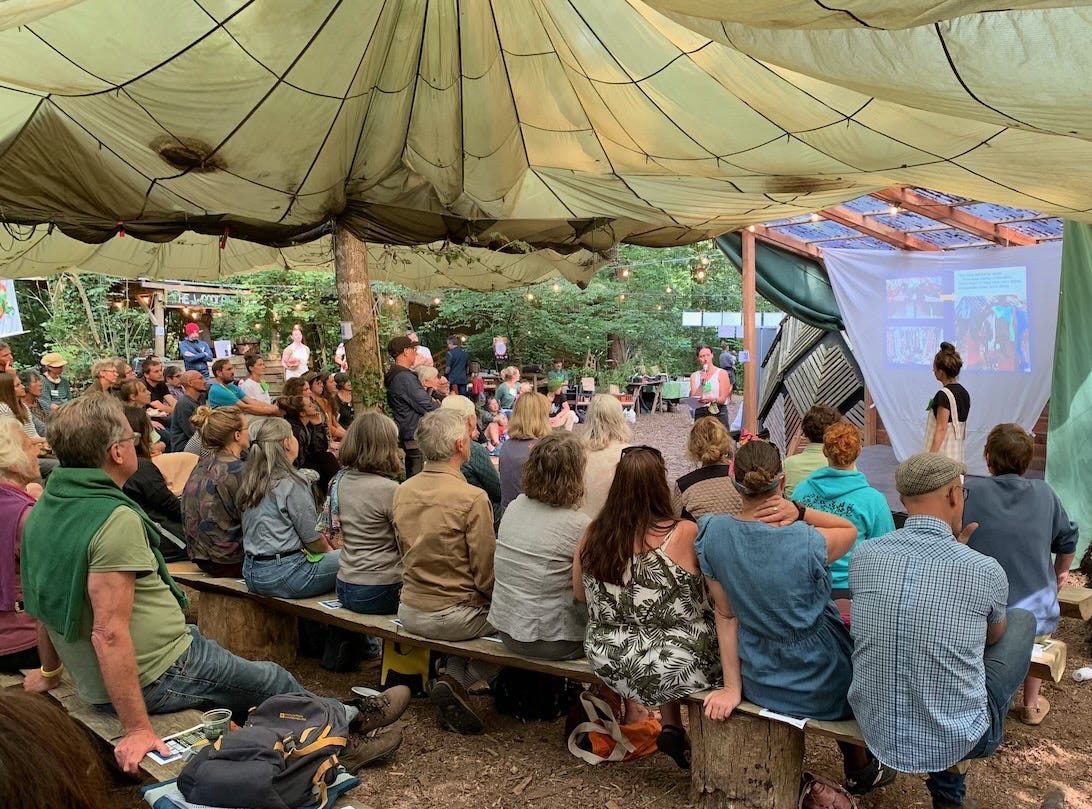
Transition Town Totnes has been a productive incubator for local economy projects, but the town’s culture was already primed for supporting change having been reinvigorated by the arrival of the Elmhirsts early last century and their experiments at Dartington Hall in education, local economy, and the arts. The School for Social Entrepreneurs operated there for a number of years. Schumacher College started there in 1992 and has been an important contributor of ‘new economy’ knowledge, knowhow, ideas, entrepreneurs, as well as deeper philosophical perspectives on economics, ecology, holistic science, and consciousness.
In recent years, the local governments have been supportive of change, offering material support from time to time. The district council offers the use of office space for another project, the Reconomy Centre, which is a community-run co-working and incubation space, launched in 2013. The county council offers funding for the Apricot Centre, supporting their regenerative agriculture educational programmes. (Apricot Centre also pitched at two of the Local Entrepreneur Forum events.) The town council has contributed, too, but with fewer tangible resources at their disposal they have been enthusiastic and encouraging supporters.
An entrepreneurial, problem-solving culture supporting new economic actors, models, and relationships has evolved alongside the development of these various elements of the ecosystem. Rob Hopkins, one of the co-founders of TTT and the International Transition Network, author and speaker, has helped to elevate this story and situate it within the larger context of aligned activities elsewhere. Local publications like Reconnect Magazine have covered all the local developments, as well. Many events provide platforms for publicly sharing narratives of change, which has helped to make this kind of conversation commonplace. Anyway, it’s a small town of about 9,000 people, so the intersections of lives and conversations are many. Almost everyone knows someone in a pro-social, pro-ecological enterprise and the idea that positive change is possible seems to be widespread.
The entrepreneurial ecosystem in Totnes is oriented toward pro-social and pro-ecological economic change. Progressive enterprises have clustered here and regularly collaborate. Workers of various kinds cross pollinate among them and the other organisations comprising this ecosystem. The community buys their products and services, or otherwise invest themselves in the initiatives animating the evolution of this ecosystem and culture. Difficult and underfunded as this kind of work might be, there is fertile soil in this relatively middle-class place. The soil is less fertile just a few miles away.
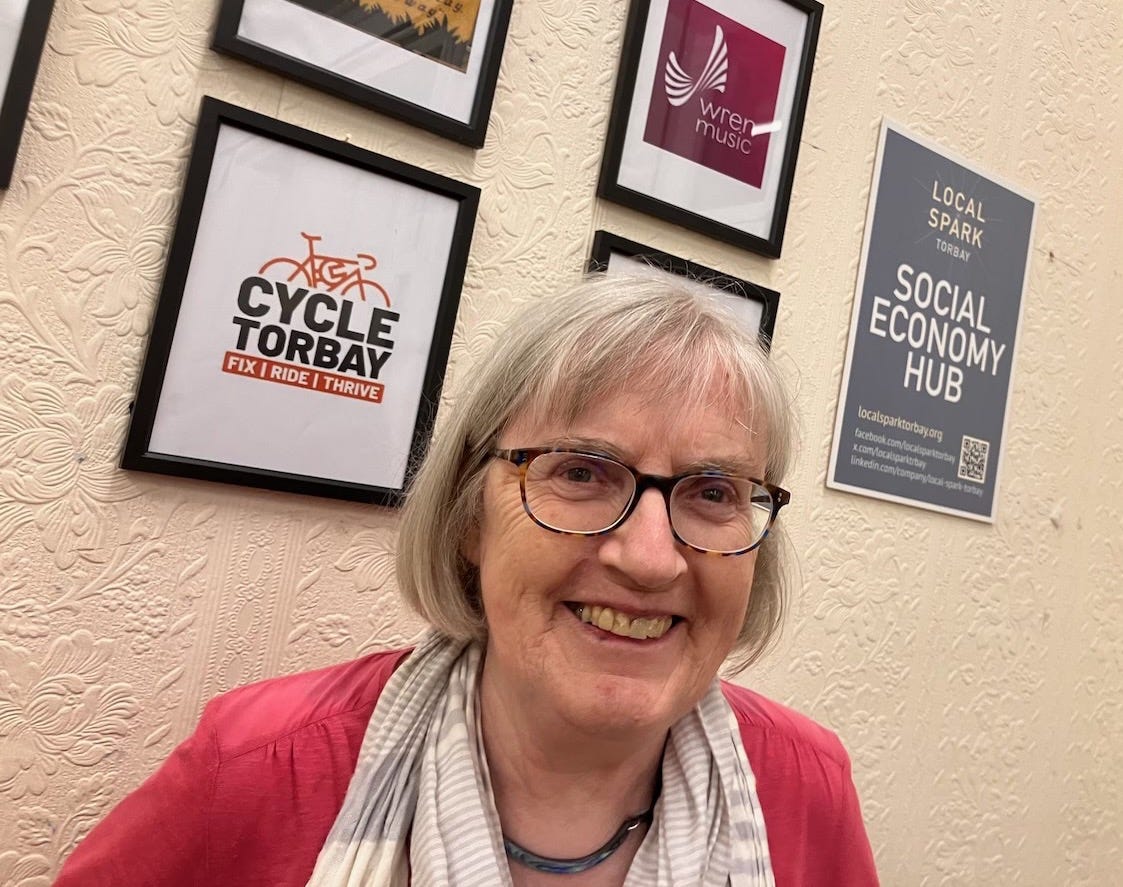
We’re trying to bring this kind of thinking and doing to Torbay, a coastal conurbation of 140,000 residents, ranking high on measures of inequality and social deprivation, and a place where extreme right-wing populist politics has a strong foothold. We started Local Spark Torbay in 2019 and have since provided advice and mentoring for dozens of social entrepreneurs, organised a network, helped start up the People’s Parkfield community hub, run a number of hackathons, and have just organised our 5th Local Entrepreneur Forum & Community of Dragons event. We’ve been playing a role in the local council’s Community Wealth Building programme, as well.
Through these activities, we’ve engaged with people with much different lived experiences and world views than one encounters in a place like Totnes. A few years ago, one might have characterised the local culture as doubtful that change for the better is possible, distrustful of local institutions, despairing for the future of the city’s young people. People here don’t want more ideology, just practical solutions to poverty, opportunities for young people, and a better quality of life as measured by steady incomes from ethical enterprises, public safety, affordable food, housing, and energy, clean air and healthy sea. Today, one sees more social enterprises and efforts to affect positive change. One hears more people talking about possibilities and more people are getting involved. Whether or not any of the work here will sufficiently resolve the economic drivers of right wing extremism remains an open question. We are very early in the process here, but along with a few other collaborators, like People’s Parkfield, Torbay Communities and LocalMotion Torbay, we hope to be creating the conditions for more good things to emerge, including development of the local pro-social, pro-ecological entrepreneurial ecosystem.
Pathways to economic change
How does economic change happen? We have many friends in this growing movement for economic change who assert that changing the narratives will change the system. And we have many friends who assert the primacy of tangible, practical deeds. We need both in the process, obviously, but the material conditions for change toward an economic state of affairs that many of us desire - just and inclusive, ecologically wise and regenerative, socially and culturally flourishing, resilient and adaptable - must exist or it probably isn’t going to happen as we might like. Which isn’t to say change isn’t coming - it is, one way or another. Or that there aren’t good things happening - there are, the ripple effects of which may lead to unforeseeable cascades of positive change through the complex-adaptive eco-socio-political-economic system. But we don’t have to leave it to fate. We can take action, informed by an understanding of the systems and patterns that lead to intentional economic change.
Change needs to happen at every scale. If economic and political power is to be decentralised, people outside the core metropolises must experience some form of green and social prosperity which addresses poverty and inequality, creates dignified work opportunities, reverses the immiseration that people feel, and brings local ecosystems back to life. This will require new economic actors, models, and relationships in those places. The roles of pro-social, pro-ecological entrepreneurs, financiers, experts, supporters of all kinds in driving economic change are essential. A systems approach that bring them into productive relationship, along with other key actors and functions, can create pathways for assembling the nutrients to start up and grow new ventures. Local culture can be positively influenced by this practical work, inspired by the public events and stories that ensue. It can evolve to value participation in the process and remake its own shared identity. A well-developed system would create the conditions for reproducing itself, circulating the capital, amplifying and diffusing the knowhow, innovating in the wake of productive failure and outside shocks, creating livelihoods, and so on. For folks working for place-based economic change, under whatever ‘post-growth’ banner, this kind of thinking puts more tools in the conceptual toolbox and provides less-ideological language with which to engage policy makers and other powerful local economic actors.
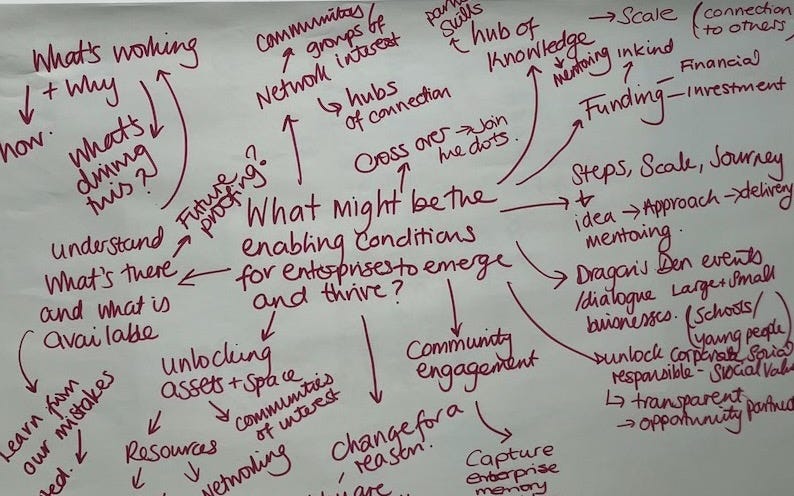
My hypothesis is that this sort of approach to economic change can help develop the good work already happening - spread it, deepen it. There are a number of places where this is in evidence. Most, perhaps all, enjoy relatively progressive or left of centre political orientations, just as in Totnes. My own agency is limited but I’ve participated in this process in Silicon Valley and in Totnes and experienced its potential. The scale in Totnes is small and local. Relatively speaking, we’re doing very well compared with towns our size, but our ecosystem is ready for more ambition and further development. A few powerful actors with greater agency could significantly add to this process. More sources of startup capital would be a logical next step, for example. If an angel investor network of high-net worth individuals emerged, or if the South West Mutual Bank were to spring back to life, one can imagine our small local economy’s shift could be amplified and accelerated.
I’m more interested in what’s possible in Torbay where the local council and college could play higher impact roles. The stakes are higher, here. The pathways for starting up new enterprises are few. This leads to my second hypothesis that this approach to economic change could begin to resolve the grievances animating the extreme right-wing populism. It will take some time, but if that can happen here, perhaps it can happen in other places, as well. I will keep you posted.
----
Further research and reading
I’m interested in other examples of where place-based economic change is happening and their guiding ideas. I’m especially interested in where it has had an effect on local political leanings, left or right. My research in this area continues. If you have examples to share, please do.
I have found these articles and the book to be very useful.
- Daniel Isenberg - How to Start an Entrepreneurial Revolution
- Erik Stam and Andrew van de Ven - Entrepreneurial Ecosystems
Elements - Philip Roundy, et al. - The Emergence of Entrepreneurial Ecosystems: A Complex Adaptive Systems Approach
- Robin Murray, Julie Caulier-Grice, Geoff Mulgan - The Open Book of Social Innovation
This article was originally posted on Jay Tompt's Substack. You can follow Jay there for essays and reportage exploring some of the ideas and work of transforming society in this century. Drawing on decades of study and experience making change, sometimes failing, sharing lessons, thinking critically, aiming to serve the common good.