Gathering Journal #2: Who Is This Gathering For?
Dan's entry into the Gathering Journal, exploring who are the people who might be coming together next year
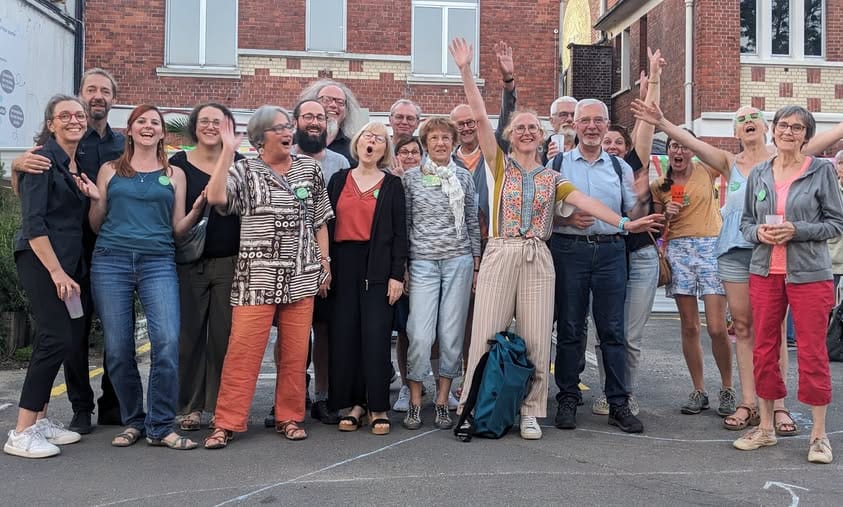
One question has been following us around over the past few weeks of planning:
Who is this gathering really for?
Simply put, it's for people who are doing transition*.
That includes all of you who are nurturing local Transition groups, supporting regional hubs, weaving together networks, or helping the wider movement grow.
And the many of you who have dedicated years of their lives to the Transition movement. Elders of the movement. Those who have planted seeds, built communities, held spaces, organized gatherings, supported local initiatives, and kept the spirit of Transition alive through changing times.
We hope that the gathering will also include organizations, networks and communities that may not identify as part of the Transition movement, but who are, in their own way, doing transition.
When I look around, I see many people and organizations whose work is deeply aligned with that spirit, even if they don't use that language.
Working with both the Ecoversities Alliance and Transition Network, I've often noticed how much overlap there is. Many Ecoversities initiatives could also be Transition initiatives, and vice versa. In both networks there are community food projects, regenerative farms, repair cafés, cooperatives, climate justice groups, community arts initiatives, youth projects, Indigenous-led work, local democracy initiatives, and countless other efforts rooted in place, relationship and care.
And there are many other networks like this.
One of the guiding intentions that's emerging as we plan this gathering is to create more opportunities for friendship, collaboration and partnership, both within and beyond the Transition movement.
Community-led networks are becoming essential infrastructure for the times we're living through. Recently, friends from the Cornwall Climate Action Network shared how, after a major storm caused widespread power outages, people began coming together in new ways. There was a growing openness and curiosity about what community-led responses could look like. It was a reminder that, as the impacts of climate disruption become more frequent, our ability to organize, support one another and act together locally will become increasingly important. I think this is true both on the local level as well as globally, on the movement or network level.
Relationship and trust sit at the heart of meaningful collaboration.
And there are few better ways to cultivate them than by gathering together. Sharing meals, sitting around a fire, learning from one another, or having conversations that continue long after the sessions have finished. Discovering unexpected common ground and beginning collaborations that none of us could have planned in advance.
We're planning to reach out to a number of values-aligned organizations and collaborative networks we're connected with to invite them into this process, including The Work That Reconnects Network, Ecoversities Alliance, Global Ecovillage Network, Permaculture Association, Biomimicry Institute, Earthrise Collective, Post Carbon Institute, Sociocracy for All, ECOLISE, Doughnut Economics Action Lab, and many more. We’d also be happy to connect with organizations and networks from our hosting country, Portugal, who are working along similar paths and would like to be part of this conversation.
If you're part of an organization, network or team that feels aligned with this vision and you're curious about being part of the 2027 International Transition Gathering in Portugal, we'd love to hear from you. We'd be happy to share more about what we're creating and explore what it might look like for members of your community to join. Feel free to reach out via email.
In Community,
Dan
* What does ‘doing transition’ mean?
Simply put, doing work that is aligned with the Transition Principles. You can read more here to get a better sense of how this shows up in Transition Groups.