
A Pattern for Starting a Transition Group
Ivan Idso from Transition Town Rochester shares their approach to organizing a Great Unleashing
In Permaculture Design, principle #7 instructs us to design from “Patterns to Details”. To first identify overarching patterns—land contours, climate zones, social structures—and then refine details. This ensures a holistic approach rather than a fragmented one. This article offers how we started Transition Town Rochester in hopes that readers may use it as a pattern to start their Transition groups. By then applying the details relevant to their community, it can make getting started less overwhelming.
I have been trying to get a Transition group started in our community for several years. The opportunity arose when I was having coffee with a friend who happened to be a member of the Unitarian Universalist (UU) church. I was explaining to her that some of the challenges were to find a place to meet and to gather enough of a following to get started. She jumped at the opportunity to lead the effort!
The UU has a program called Green Sanctuary program which, among other things, is a means by which congregations can work toward focusing on the theological, spiritual and ethical aspects of human activities that affect the health and sustainability of the living earth. The Green Sanctuary team offered a space to meet, an organizing team, and a base of potential members who already embrace the ethics of the Transition initiative. We were off to a great start!
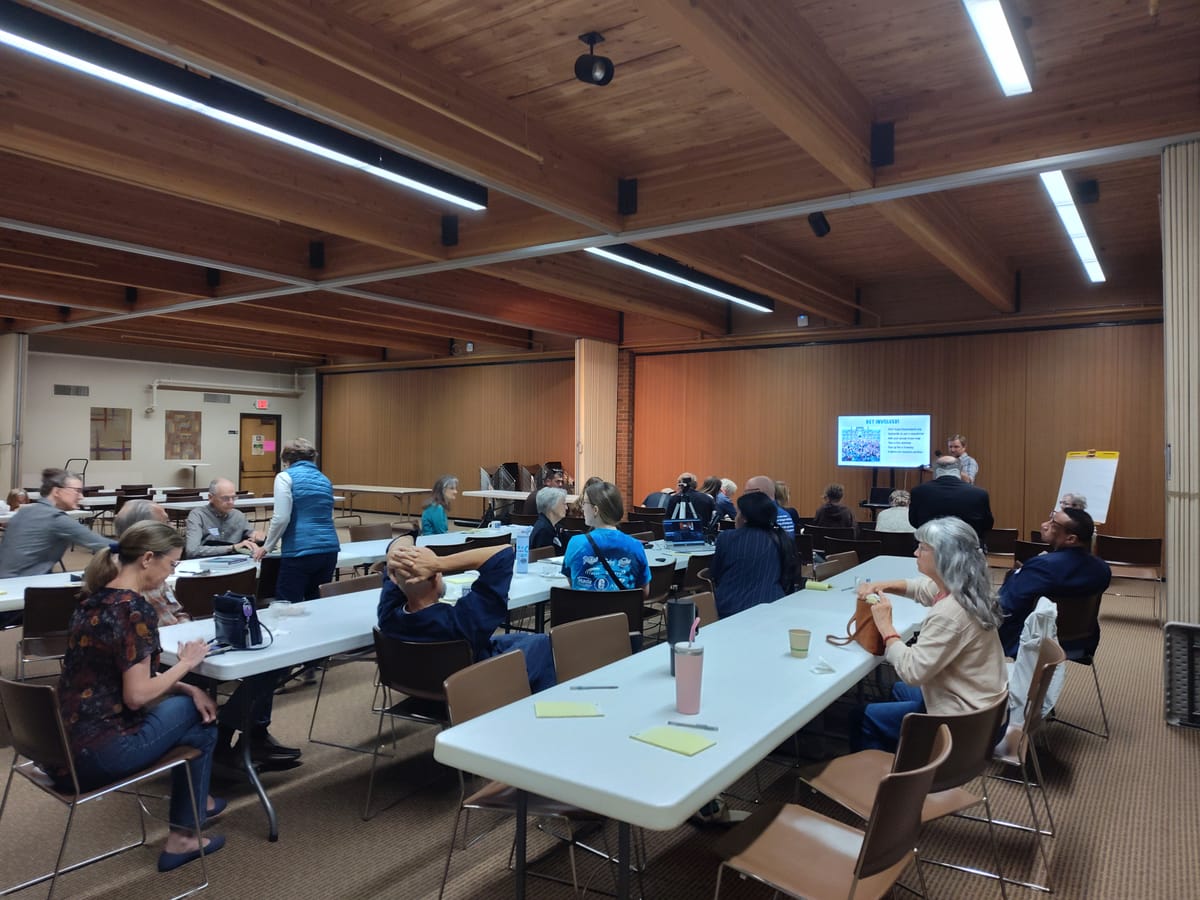
One of our first efforts as an organizing team, after establishing meeting times, was to set up a “Great Unleashing”. While it’s nice to wait longer before having an unleashing, the world is rapidly changing for the worse and the need has never been stronger. We set a date 5 months from our first meeting and determined that it should occur in the same timeframe as our regular meeting which happens to be on Sunday afternoon. The timeframe we chose was from 1:00 – 6:30, which is enough time to build community and not something that would be a deterrent with everyone’s busy lives.
Regarding a format for the Unleashing, we wanted to keep it fairly easy to organize, build community, inform our attendees on the Transition initiative, have a keynote speaker, and serve a meal. I was fortunate enough to get a grant to cover a speaker from the local organization “EarthFest Rochester”. I reached out to Don Hall who currently serves as Training Coordinator for the global Transition Network. I had hosted him a couple of years ago while on his Regeneration Handbook book tour. I was thrilled when he agreed to come to Rochester to speak and moderate our unleashing.
Don recommended the following outline for our event and it worked out very well in meeting our goals.
1:00-1:30 Registration
1:30-2:15 Community Mapping- this is a way to get to know others and make everyone comfortable. Groups are divided into four open spaces in corners of room based on a topic, such as what part of the city do you live in. The group then had ten minutes to talk amongst each other. This was repeated three times with different topics.
2:15-3:30 Don Hall Presentation - why Transition is important, what Transition is about, and excerpts from his book on growing a Transition group
3:30-3:45 Break
3:45-4:30 Visioning- creating the belief in a positive vision of the future and the work to make it real. This involved a guided visioning exercise and time to journal about your vision. The group then shared some of their visions.
4:30-5:00 Action planning- what you might contribute to our larger community. We paired up and each person answered the following questions:
- What would you like to contribute?
- What can help you do that?
- What might get in the way?
- What can you do in the next couple of months?
5:00-5:30 CircleBack- reflection of the day. We arranged our chairs in a circle and went around so each person could share what they want to contribute to the community in the future.
5:30-6:30 Meal
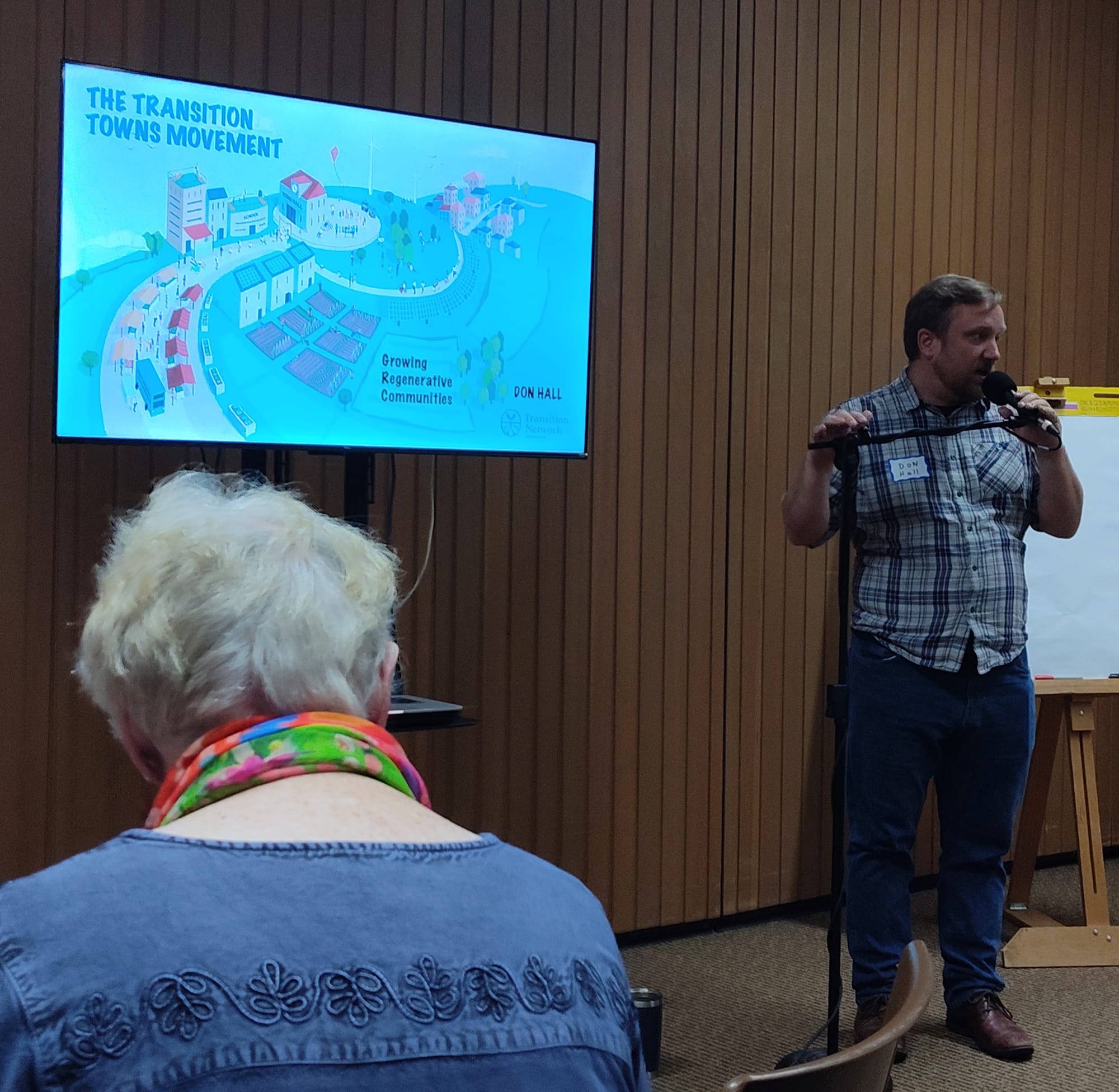
Some items you will need include name tags, a flip chart, paper & pens for journaling, a projector & screen, and a microphone. We created an event on Eventbrite for people to sign up so we would have a rough count on attendees for food, but there were also some walk-ins. We had a free-will donation to cover expenses and childcare was offered but there wasn’t a need.
This group will continue to move forward and I am planning to create a hub for Rochester and start another group in my neighborhood. The hope is that other neighborhoods, churches, and groups will also adopt the Transition approach and become part of the hub.
Beyond the unleashing, I want to share these resources that you may not be aware of. Besides Rob Hopkins, two people who played an important part in the beginnings of the Transition initiative were David Fleming and Shaun Chamberlin.
- “https://www.darkoptimism.org/books/” by Shaun Chamberlin.
- The film “The Sequel” based on David Fleming’s work with Transition Towns. This could also suffice in place of a speaker for your unleashing if needed.
- “Surviving the Future” by Shaun Chamberlin, David Feming, and Rob Hopkins.
I hope you find this useful,
Ivan Idso
Transition Town Rochester